
 Lounge furniture

 Chests of drawers, cabinets, display cabinets

 Tables, coffee tables and coffee tables

 Chairs and stools

 Wardrobes and shelves

 Beds and mattresses

 Office furniture

 Bathroom furniture

 Shelves and wall units

 Extras
 Kitchen furniture

 Children's furniture

 Hallway furniture

 Consoles and dressing tables

 Extras



05
March
What table shape is best for a small dining room? Why does a round table "save" walkways?
Arranging a small dining room is a fight for every centimeter. We often have to choose between the dream of a large family table and the harsh reality of a tight floor plan where every piece of furniture seems too bulky. The biggest challenge, however, is not simply fitting the tabletop in the space, but ensuring smooth movement around it. In 2026, when the trend of “small living” and functional micro-apartments dominates construction, the key question becomes: what table shape will actually allow us to live comfortably? Although a rectangular table seems like the obvious choice against a wall, it is the round forms that increasingly turn out to be the “lifesaver” for difficult passageways.
In this article, we will analyze the ergonomics of movement in small interiors. We will explain why the absence of sharp corners is not only an aesthetic matter but above all a way to improve circulation paths. You will learn how a round table tricks the eye, making a room appear larger, and when it is still worth choosing a classic rectangle. This is a practical guide for anyone who wants to create a dining area that is comfortable, safe, and spacious—despite limited square footage.
Psychology and Geometry: Why Does a Round Table Seem Smaller?
A round table has a unique property—it has no corners, which in small rooms are the most problematic points. A narrow passage next to a rectangular table often ends with a painful hit against its sharp edge. A round tabletop naturally “moves away” from a passing person, creating a smooth line of movement. As a result, passages only 70–80 cm wide next to a round table feel significantly more comfortable than the same space beside the edge of a rectangular one.
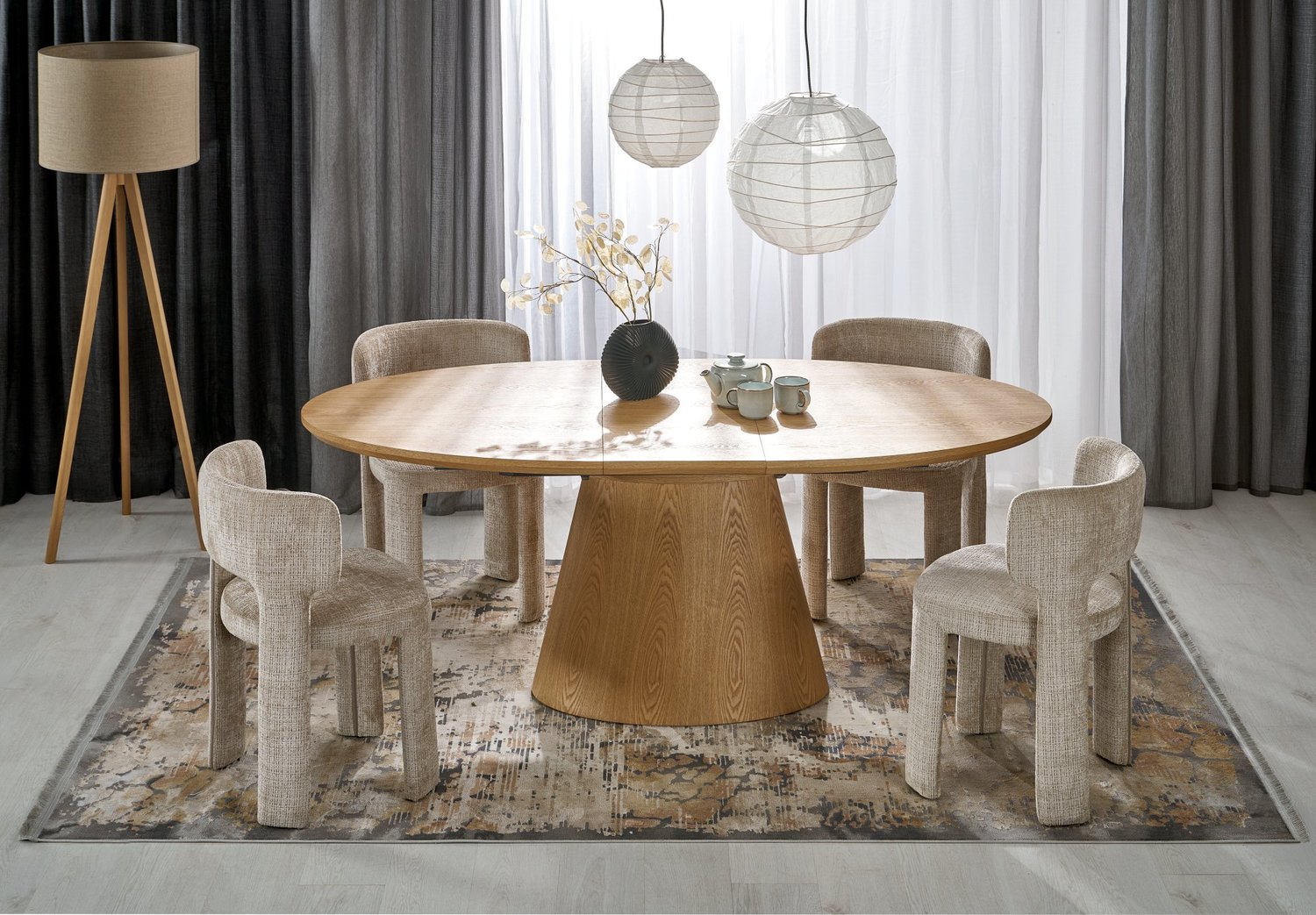
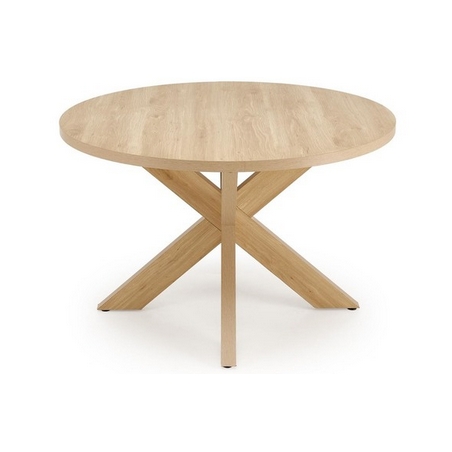
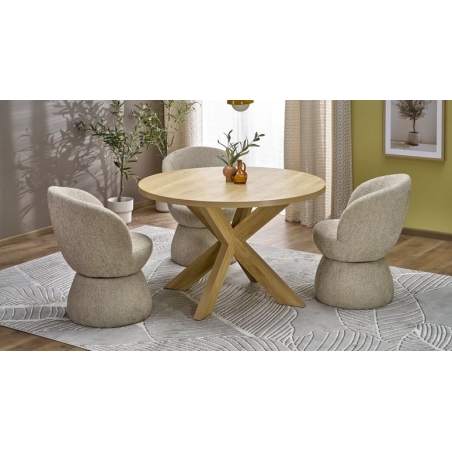
Visually, a round table occupies less space because it does not divide the room with rigid lines. Its shape exposes more of the floor around it, which optically enlarges the space. Additionally, models based on a single central leg instead of four traditional legs in the corners provide greater freedom when placing chairs. In small dining rooms, this allows seats to be pushed further under the tabletop when not in use.
Round vs. Rectangular Table in a Small Interior
The decision about shape should depend on the layout of the room. The table below compares both solutions in the context of limited space.
| Criterion | Round Table | Rectangular Table |
|---|---|---|
| Circulation paths | Easier (no sharp corners “saving” the passage) | More difficult in narrow spots |
| Number of people | More flexible (an extra chair can easily be added) | Fixed (corners limit available space) |
| Placement against a wall | Less efficient (more unused space) | Very efficient (space-saving) |
| Sense of lightness | High (rounded shapes visually lighten the interior) | Low (dominant, heavier form) |
| Ideal for… | Square dining rooms and open living areas | Long, narrow kitchens |
When Does the Rectangle Win? The Power of Pushing It Against the Wall
Despite the huge advantages of round tables, there are situations where a rectangular table measuring 120×80 cm will be the better choice. This mainly applies to very narrow, “corridor-style” rooms. A rectangular table can be pushed completely against a wall (or under a window) along one of its longer sides, which frees up a large portion of the floor in the center of the room. A round table moved away from the wall always creates so-called “dead space” behind the curve of the tabletop that cannot be used efficiently.
A compromise solution in 2026 is the “squircle” table shape—a combination of a square with strongly rounded corners. It allows the table to be placed against a wall while still offering the soft lines and safety in passageways typical of round models.
Golden Rules for Placing a Table in a Small Dining Area
- The 90 cm rule: Try to maintain at least 90 cm of distance from the edge of the table to the wall or kitchen cabinets. This allows a chair to be pulled out comfortably and lets someone pass behind a seated person.
- Mirrors as support: Hang a large mirror on the wall next to the table. Combined with the round tabletop shape, it will create an illusion of depth and make the dining area feel less claustrophobic.
- Light legs: Choose tables with thin metal legs or transparent bases. The more floor you can see under the table, the lighter the entire room will appear.
FAQ – Frequently Asked Questions About Table Shapes
Is an extendable round table stable?
Modern extendable round tables are very stable thanks to the use of steel guide mechanisms. When extended, they change shape into an oval, which preserves the advantage of having no corners while increasing the number of seats by up to four people. It is an ideal choice for apartments where every meter counts on a daily basis, but a larger table is needed for special occasions.
What diameter of a round table is best for 4 people?
The absolute minimum for four people is a diameter of 100 cm, but for full comfort (space for plates and a serving dish in the center) we recommend 110–120 cm. If the dining area is exceptionally small, a 90 cm model will work for three people and can accommodate four during shorter meals.
Does a round table fit a modern loft style?
Absolutely! A combination of a thick, round oak tabletop with a black metal “spider” base is one of the strongest trends of 2026. The round form perfectly breaks the raw, straight lines typical of loft interiors, adding warmth without losing the industrial character.
Summary
In a small dining room, the shape of the table determines whether the space will become the functional heart of the home or an obstacle course. A round table is a master at “saving” passageways—its curved form allows for smooth movement and adds lightness to interiors that often feel cramped. A rectangular table, on the other hand, remains irreplaceable wherever we need to maximize space against a wall. Before making a decision, mark the planned table shape on the floor with painter’s tape—it’s the simplest way to check whether the chosen model will allow you to comfortably pull out a chair and enjoy shared meals without painful encounters with the corner of a piece of furniture.
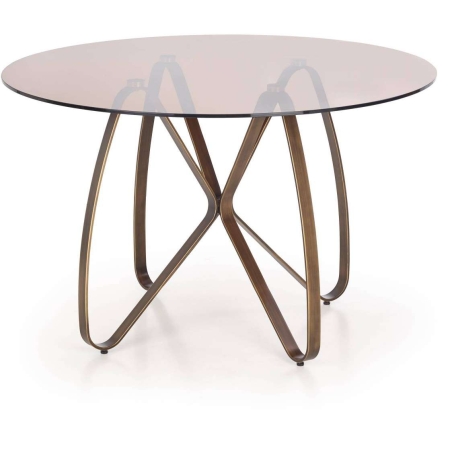
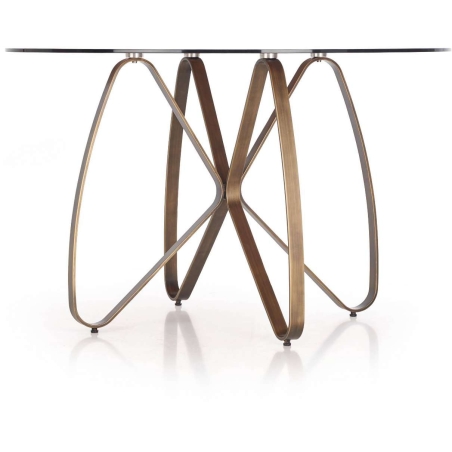
Wid: 120.00, Dep: 76.00, Hgt: 120.00.
Lungo glass round table antique gold Halmar
zł1,249
- Express delivery
- Ability to bring in
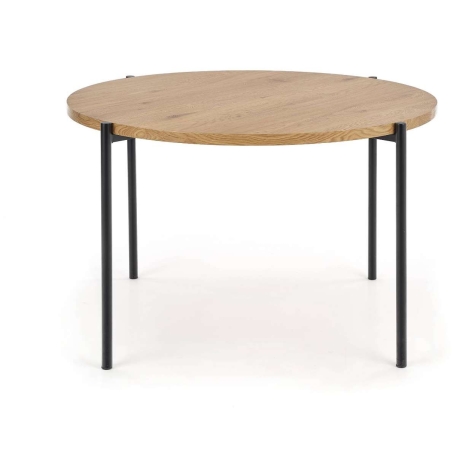
Wid: 120.00, Dep: 120.00, Hgt: 76.00.
Morgan round table golden oak / black Halmar
zł719
- Express delivery
- Ability to bring in
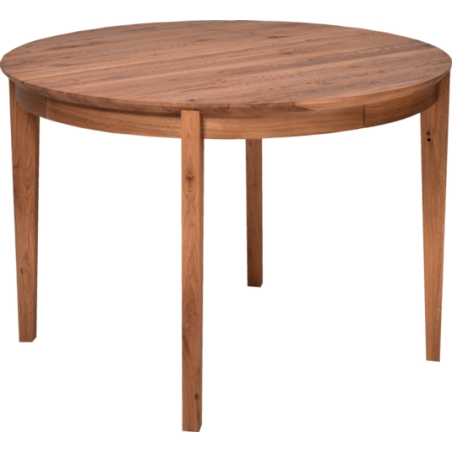
Wid: 183.00, Dep: 45.00, Hgt: 77.00.
Loft round table LOF.073.XX Krysiak Meble
zł3,926
- Ability to bring in
Loading...
check_circle
check_circle