
 Lounge furniture

 Chests of drawers, cabinets, display cabinets

 Tables, coffee tables and coffee tables

 Chairs and stools

 Wardrobes and shelves

 Beds and mattresses

 Office furniture

 Bathroom furniture

 Shelves and wall units

 Extras
 Kitchen furniture

 Children's furniture

 Hallway furniture

 Consoles and dressing tables

 Extras





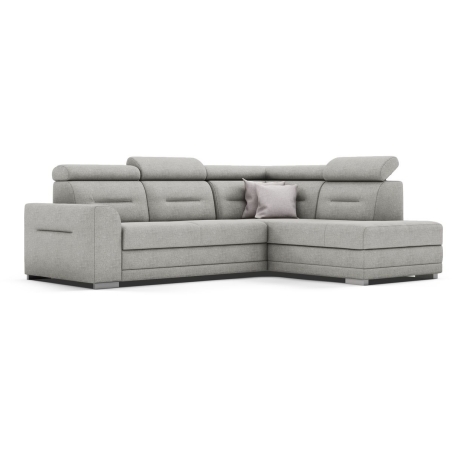
Wid: 260.00, Dep: 210.00, Hgt: 90.00.
Salto MP Nidzica corner sofa
- Ability to bring in
- Available lewo / prawobiased
HR foam (from High Resilience) is a type of polyurethane foam with a density ranging from 35 to 55 kg/m³ that quickly returns to its original shape after you get up. In upholstered furniture, it’s considered one of the more durable options a sofa with HR foam should keep its shape for 8-10 years of daily use.
That’s the short answer. If you want to know more how it differs from standard T foam, when paying extra makes sense, and when it doesn’t - keep reading.
You won’t see it with the naked eye because it sits under the upholstery. But there are three ways to identify it:
Check the manufacturer’s description. In the product specification, look for the “HR” label together with a number, for example HR 35, HR 40, HR 45. The number indicates density in kg/m³. The higher it is, the heavier and more durable the foam becomes (but also more expensive).
By touch. Sit on the sofa and stand up. HR foam returns to shape within 1-2 seconds without leaving any visible imprint. If the indentation stays longer, it’s not HR it’s standard T foam (regular polyurethane foam) or memory foam.
By weight. A sofa with proper HR foam is simply heavier than a sofa of the same size made with cheap T foam. If you can lift a two-seater sofa with one hand, there’s probably some cost-cutting inside.
Standard polyurethane foam (marked as T15, T25, T30) has cells with a fairly regular structure inside. HR foam has cells with an irregular, “torn” structure, and these are responsible for its ability to bounce back into shape. Imagine the difference between a kitchen sponge (you squeeze it and the dent remains) and an exercise ball (you squeeze it and it bounces back). HR is much closer to that ball.
What you get:
What you don’t get:
The most common comparisons people make before buying:
HR vs standard T foam (T25, T30). T foam is cheaper, but it wears out faster. On a sofa used daily, the difference becomes visible after a year or two. If you’re buying furniture for a guest room where someone sits once a week, T foam is enough. For a living room sofa where you watch movies every evening - HR.
HR vs memory foam. Memory foam adapts to the body under heat and pressure great for mattresses for people with back pain. HR doesn’t adapt; it supports. In sofas, memory foam can be too soft and tends to trap heat in summer, while HR is more versatile.
HR vs latex. Latex (natural or synthetic) is more durable than HR, but also 2-3 times more expensive and heavier. It’s rarely found in sofas and is more common in premium mattresses.
This is the question that actually matters:
Watch out for a common marketing trick: some manufacturers write “HR foam” without stating the density. If there’s no number, it’s most likely HR 28–30 - the lower limit of what can even be called HR. Always ask for the exact density.
Yes, but with a caveat. In a sofa bed used for daily sleeping (for example in a studio apartment), HR 40+ should perform well for several years. For occasional sleeping - guests once a month HR 35 is enough. For sleeping as your main bed long-term, a dedicated mattress is a better option; in that case look toward high-resilience foams 50+, latex, or memory foam.
Three things:
Yes, polyurethane foam is chemically neutral after the production curing process. By itself, it does not cause allergies. Allergic reactions are more often triggered by upholstery fabric or protective treatments.
New foam may have a mild smell for 2–7 days. That’s normal - simply ventilate the room. If the smell lasts longer than 2 weeks and is strong, it may indicate low-quality foam or improper curing.
Yes. Most foam manufacturers sell custom-cut foam sheets. You need to measure the seat insert (length, width, thickness) and order HR foam with a density of 35-45 kg/m³. Depending on dimensions, the cost is usually around PLN 150-400 per seat cushion.
These are two different approaches. Bonnell springs create a firmer, more “bench-like” seating feel and are cheaper. HR foam is more resilient and distributes pressure better. More and more manufacturers combine both - Bonnell springs underneath and HR foam on top.
Wid: 260.00, Dep: 210.00, Hgt: 90.00.
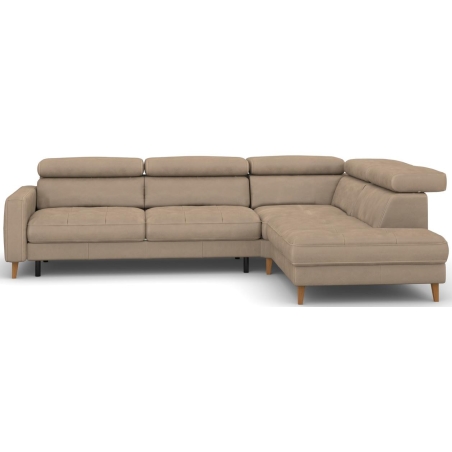
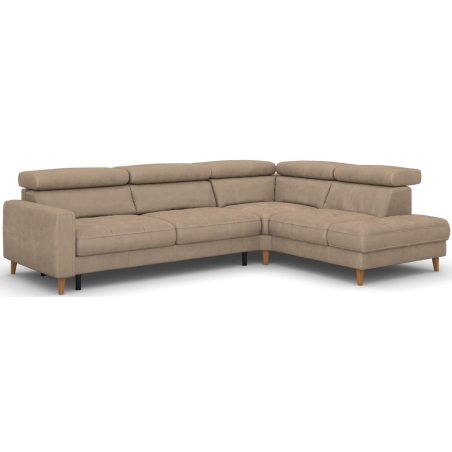
Wid: 109.00, Dep: 103.00, Hgt: 93.00.
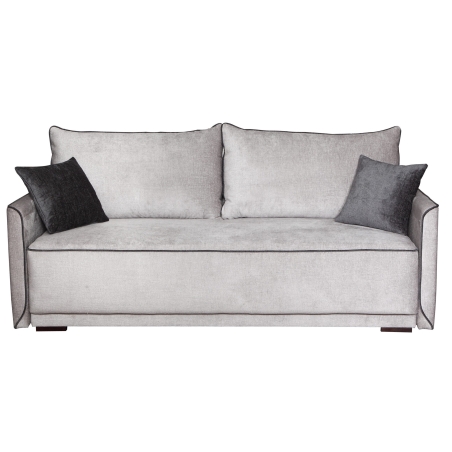
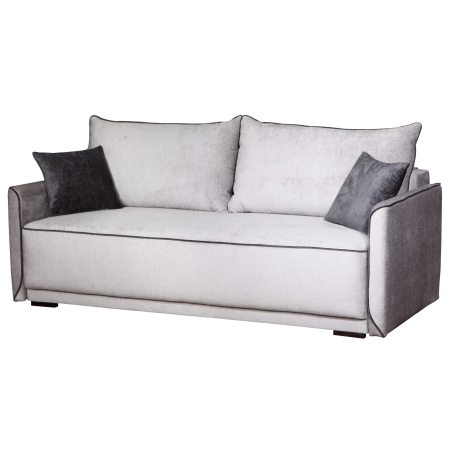
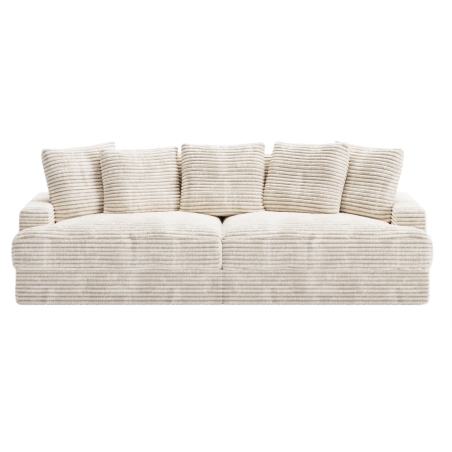
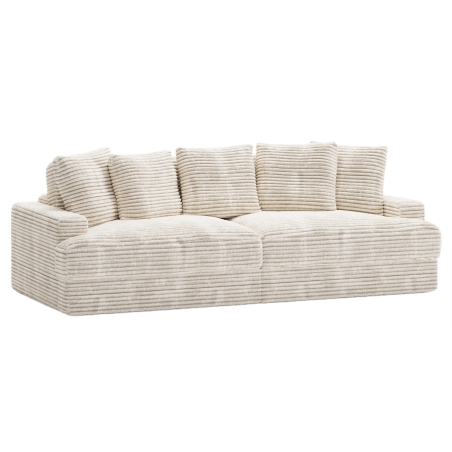
Wid: 255.00, Dep: 120.00, Hgt: 86.00.
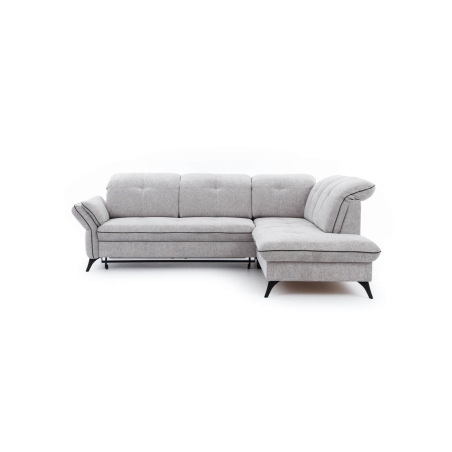
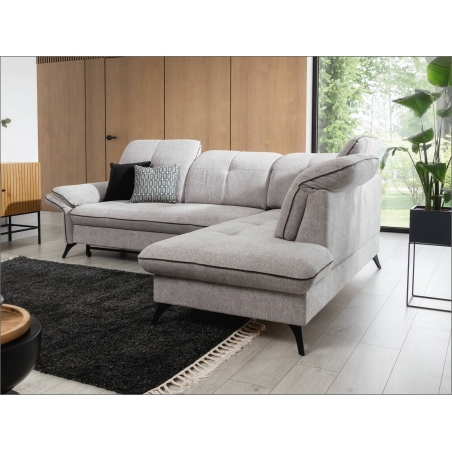
Wid: 280.00, Dep: 216.00, Hgt: 105.00.
check_circle
check_circle