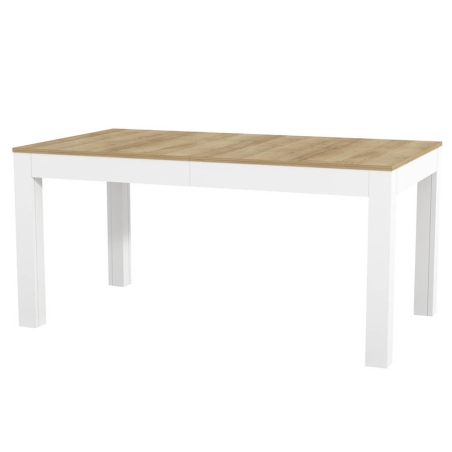
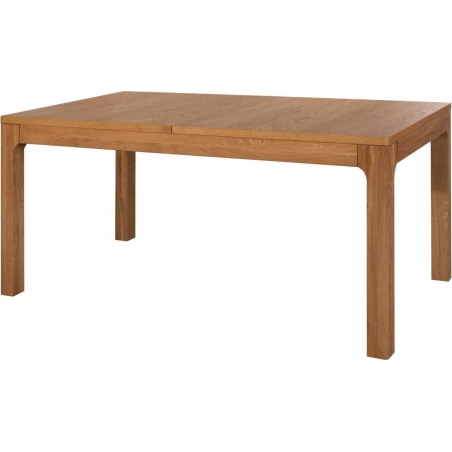
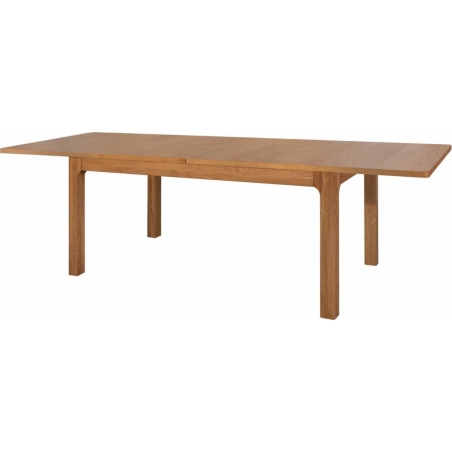
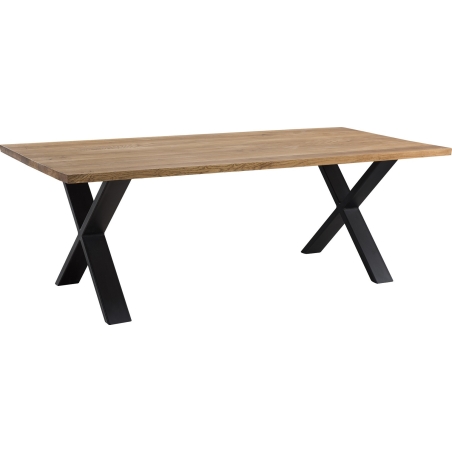
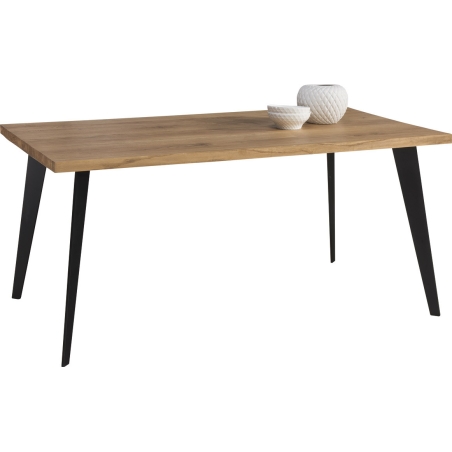
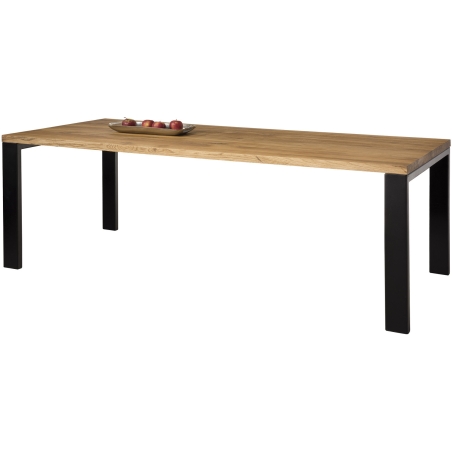
Choosing a dining table is a decision for years to come. Browsing offers, we quickly notice huge price differences between models that look almost identical in photos. The key to understanding this difference is the material used for the tabletop. On one side, there is solid oak – a symbol of luxury and indestructibility; on the other, veneer – a clever combination of nature and modern furniture technology. In 2026, when we place increasing importance on sustainability and material authenticity, it is worth knowing what lies beneath the surface of the lacquer and how a given choice will affect the table’s use in everyday home conditions.
In this article, we debunk the myths surrounding both materials. We explain the production process of oak and veneered tables, compare their resistance to mechanical damage, and analyze which of them will better stand the test of time in a dynamic family home. This is a practical guide that will help you match your budget to realistic expectations regarding the durability and aesthetics of the furniture.
Solid oak – the king of longevity
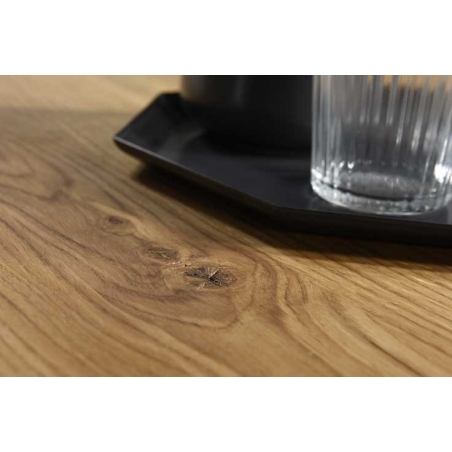
A solid oak table is a “living” product. Made entirely from thick oak boards, it features a unique grain pattern that is never repeated in any other piece. Oak is a hard, heavy wood that is naturally resistant to decay. Its greatest advantage is the possibility of repeated renovation. If, after a decade of use, the tabletop becomes scratched or stained, it is enough to sand it down and oil it again to restore the appearance of a new piece of furniture.
The high price of solid oak results from the cost of the raw material and the long process of drying and seasoning the wood. Solid wood works – it expands and contracts under the influence of air humidity. That is why high-end oak tables require precise craftsmanship and appropriate constructions (e.g., steel reinforcements underneath) to prevent cracking. It is a generational investment that gains value and nobility over time.
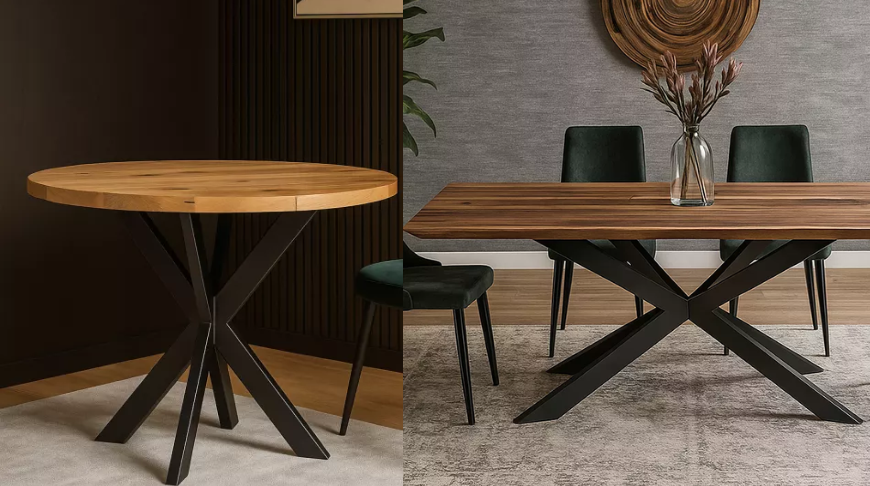
Veneer – natural aesthetics in an accessible form
Veneer is nothing more than very thin sheets of natural wood (usually from 0.5 to 3 mm thick) that are glued onto a furniture board (MDF or particleboard). As a result, we get a table that looks and feels like wood on the outside, but inside is lighter and more dimensionally stable. Veneer is not a “fake” of wood – it is still a natural raw material, just used in a more economical and ecological way (from a single oak trunk, much more veneered surface can be obtained than solid boards).
Veneered tables are resistant to so-called warping, i.e., bending of the tabletop under the influence of temperature. They are also lighter, which makes them easier to move. However, their main limitation is surface durability. The thin layer of wood does not allow for deep sanding – veneer renovation is difficult, and deep scratches may expose the board underneath, which is almost impossible to repair aesthetically.
Comparison: Solid oak vs. Oak veneer
The comparison below will help you quickly assess which material better suits your needs and lifestyle.
Renovation possibility Full (can be sanded multiple times)Very limited
| Feature |
Solid oak table |
Veneered table |
| Durability |
Extreme (generational) |
Good (10–15 years) |
| Structural stability |
May “work” (crack at low humidity) |
Stable (does not warp) |
| Weight |
Very heavy and stable |
Lighter, easier to transport |
| Price |
High (investment) |
Affordable (optimal price-to-appearance ratio) |
What to choose? Questions that make the decision easier
Before buying, it is worth honestly answering a few questions about everyday life in your home:
- Will the table be intensively used by children? If you expect spilled juices, toy car impacts, and drawing with crayons directly on the tabletop, solid oak will be the better choice, as it can be repaired.
- How often do you change your interior arrangement? If you like changes and will probably want to replace the table with a different model in 5–7 years, veneer is a more financially rational choice.
- What is your budget “right now”? If you are looking for the prestigious look of wood but cannot afford an expense of several thousand złoty, high-quality veneer will give you the same visual effect at a much lower cost.
FAQ – Frequently asked questions about tabletop materials
Does an oak table always have to be oiled?
No, oak tables can also be lacquered. Oil highlights the natural structure and allows for easy spot repairs, but requires regular maintenance (once every six months). Lacquer creates a hard, “closed” layer that better protects against moisture, but if scratched, it requires sanding the entire tabletop.
How can you tell a solid table from a veneered one at first glance?
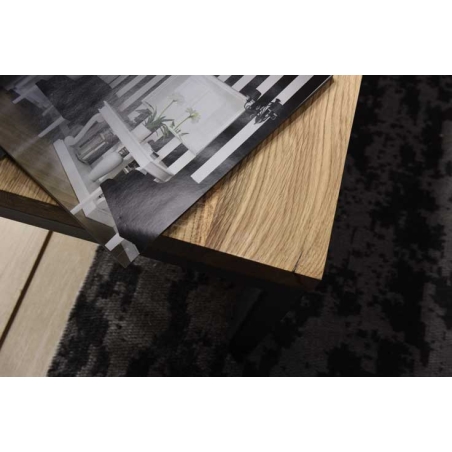
The best way is to look at the edge of the tabletop. In a solid table, the grain from the top “flows” smoothly onto the side (the cross-section of the wood is visible). In a veneered table, the sides are usually covered with a thin strip (edge banding), whose grain pattern rarely matches the top perfectly.
Is veneer less ecological than solid wood?
On the contrary – veneer is considered a more environmentally friendly material in terms of resource management. It allows for optimal use of noble wood species, reducing the number of trees that need to be cut down to produce the same number of pieces of furniture.
Summary
The final choice between solid oak and veneer depends on your definition of value. An oak table is a product for those seeking uncompromising quality, authenticity, and a piece of furniture that tells the story of the home with every scratch. Veneer, on the other hand, is a triumph of engineering, offering the beauty of nature at a price accessible to a wider audience, while maintaining high stability of the furniture. Regardless of the decision, remember that proper care and the use of trivets for hot dishes will allow both types of tables to please the eye for a long time.

 Lounge furniture

 Chests of drawers, cabinets, display cabinets

 Tables, coffee tables and coffee tables

 Chairs and stools

 Wardrobes and shelves

 Beds and mattresses

 Office furniture

 Bathroom furniture

 Shelves and wall units

 Extras
 Kitchen furniture

 Children's furniture

 Hallway furniture

 Consoles and dressing tables

 Extras