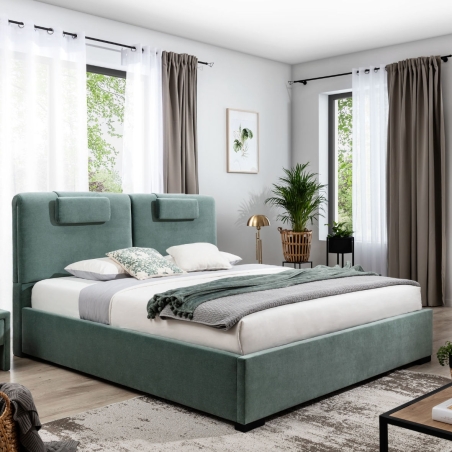
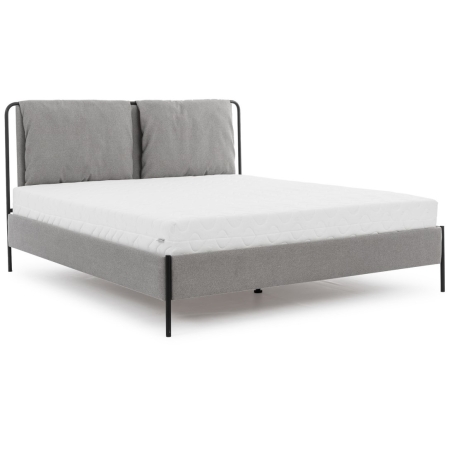
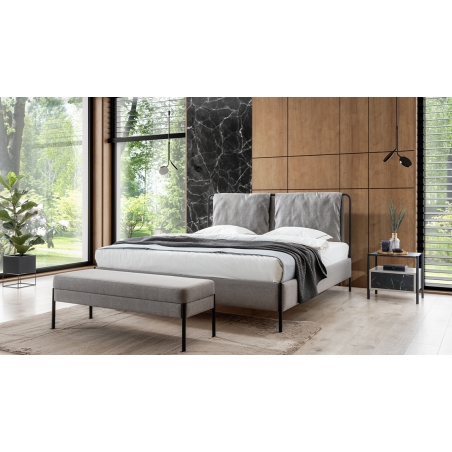
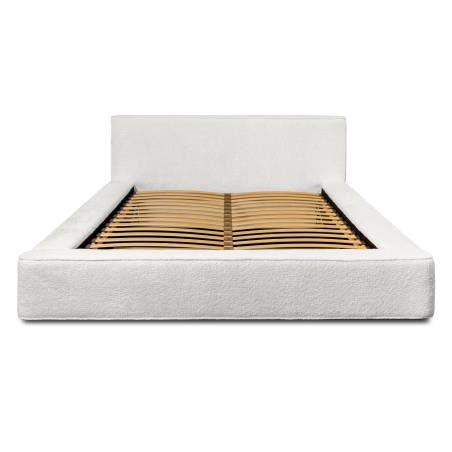
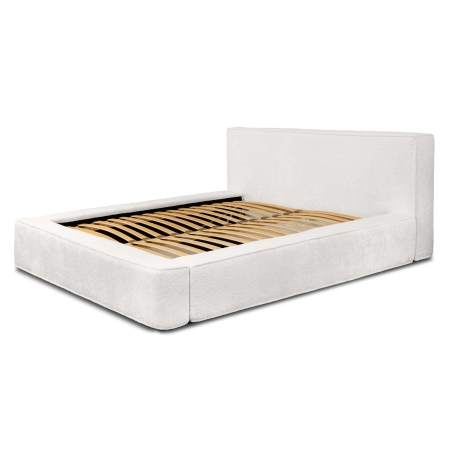
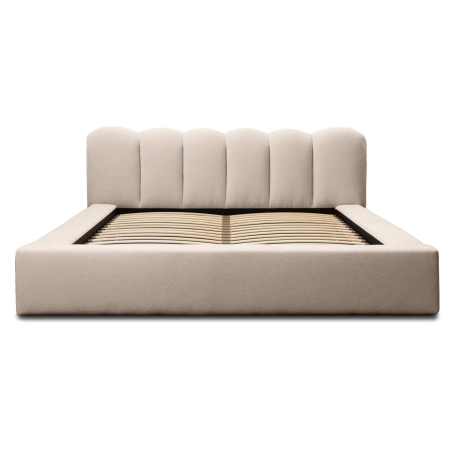
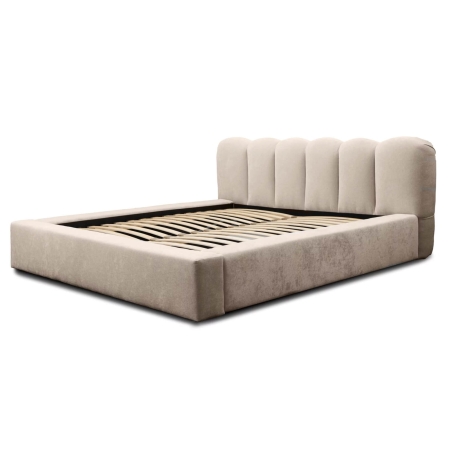
The minimum clearance around the bed is 60 cm on each side. This is enough for an adult to walk forward comfortably, make the bed, and get up at night without bumping into furniture. If the bedroom allows, the optimum is 70–80 cm. Below 50 cm, movement becomes uncomfortable and may lead to bumps and bruises.
Before the courier brings the bed frame into your home, it’s worth knowing a few numbers. In this guide, you’ll find ready-made spacing tables, formulas for the minimum bedroom width for each mattress size, and answers to the most common questions about space planning.
Minimum clearance by the bed: 60 cm is the absolute limit
In interior design, it is assumed that the minimum walkway width around a bed is 60 cm. Why exactly this much? It’s the distance that allows an adult to walk forward (not sideways), bend comfortably while making the bed, and open the bottom drawer of a bedside table without awkward movements.
If space allows, aim for 70–80 cm — this distance provides a sense of spaciousness and allows two people to pass each other sideways. The absolute lower limit is 50 cm: below this value, movement becomes uncomfortable and potentially unsafe in the dark.
How much space do you need? Table for every bed size
Below you’ll find ready calculations of the minimum bedroom width depending on the selected mattress. The mattress width includes 60 cm of clearance on each side.
| Mattress size |
Mattress width |
Min. bedroom width (2× 60 cm) |
Comfortable width (2× 75 cm) |
| Single |
90 cm |
210 cm |
240 cm |
| Large single |
120 cm |
240 cm |
270 cm |
| Double S |
140 cm |
260 cm |
290 cm |
| Double M |
160 cm |
280 cm |
310 cm |
| Double L |
180 cm |
300 cm |
330 cm |
| King size |
200 cm |
320 cm |
350 cm |
Note: the values above refer to the mattress width, not the entire bed. Add the frame — details in the section below.
Space planning: bed vs other bedroom furniture
Walkway clearance is not everything — every piece of furniture near the bed requires its own buffer space. The table below lists recommended distances depending on what stands next to the bed.
| Adjacency |
Minimum distance |
Why this much? |
| Bed – wall |
60 cm |
Comfortable movement and making the bed |
| Bed – hinged wardrobe |
100–120 cm |
Space for open door + person |
| Bed – sliding wardrobe |
70 cm |
Comfortable access inside the wardrobe |
| Bed – chest of drawers |
90–100 cm |
Space for open drawer + person |
| Bed with storage |
140 cm from foot |
Required space to fully open storage |
| Bed – radiator |
min. 10–15 cm |
Proper heat circulation |
Mattress size does not equal total bed dimensions
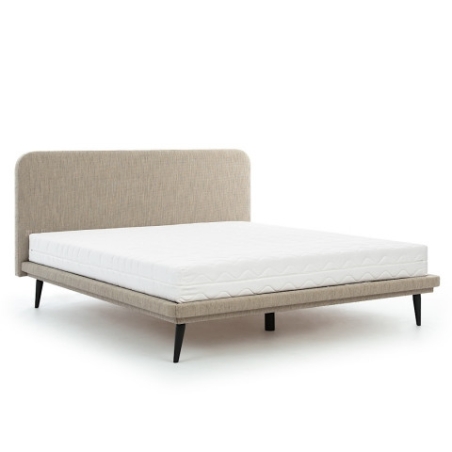
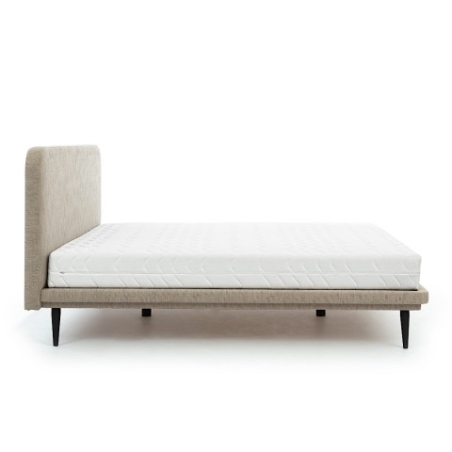
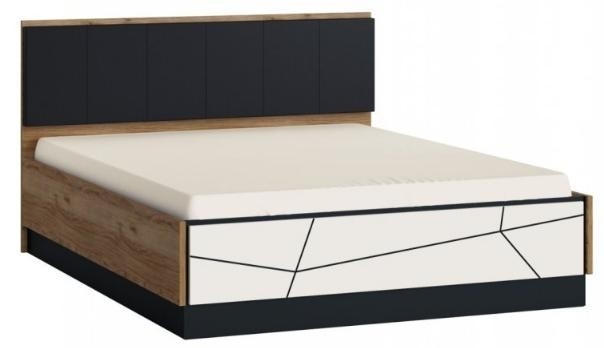
This is the most common mistake when shopping: a 160×200 cm mattress does not mean the bed measures 160×200 cm. The frame, upholstery, and headboard add extra centimeters on each side.
- Continental beds — width usually equals mattress width (no side frame). Best choice for narrow bedrooms.
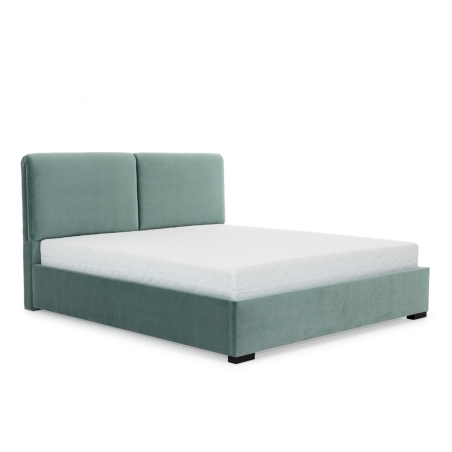
- Upholstered beds — the frame can add from 5 up to 20 cm to both width and length due to thick sides and headboard.
- Wooden beds — usually add about 6–10 cm to the sleeping area outline.
- Beds with storage — require 140 cm of free space at the foot to fully open the storage compartment.
Practical rule: measure the total furniture size, not just the mattress — only then check if you have 60 cm of clearance on both sides.
How many square meters should a bedroom have?
Besides clearance around the bed, it’s useful to have a reference for the whole room:
- minimum 10–12 m² — enough for a bed and basic circulation, without additional furniture,
- around 15 m² — comfortably fits a bed, two bedside tables, and a dresser or small vanity,
- around 20 m² — allows a full-size wardrobe with hinged doors without restricting movement.
Frequently asked questions about clearance around the bed
How much space should you leave around a 160 cm bed?
For a 160 cm mattress, the minimum bedroom width is 280 cm (160 + 60 + 60). If one side is against a wall with no passage, leave at least 60 cm on the other side. Also add the bed frame — usually 5–10 cm on each side.
What is the minimum clearance around a bed?
The minimum clearance around a bed is 60 cm on each side. The optimum is 70–80 cm. Below 50 cm, movement becomes uncomfortable and unsafe in the dark.
Can a bed be placed with one side against the wall?
For a double bed, this is a last-resort solution — the person sleeping by the wall must climb over their partner. If necessary, leave at least 10 cm from the wall to easily fit sheets and avoid hitting your hands against the wall while sleeping.
How much space do bedside tables take?
A standard bedside table is 40–50 cm wide. When planning a bedroom, add this dimension on both sides of the bed. If space is limited, replace them with wall-mounted shelves or slim tables with metal legs — they offer the same function without taking up valuable space.
What to do if the bedroom is long and narrow?
Consider placing the bed with the headboard against the longer wall — even if access is only from one side. Alternatively, choose a 140 cm bed instead of 160 cm: gaining 20 cm on the sides significantly improves usability.
How much space is needed for a bed with storage?
Beds with storage require at least 140 cm of free space at the foot to fully open the compartment. If there’s a wall or wardrobe there, this type of bed becomes impractical despite its apparent space-saving benefit.
How to check if a bed will fit before buying?
Mark the outline of the future bed on the floor using painter’s tape, including the frame — not just the mattress. This simple 5-minute test will show whether you have 60 cm of free passage on both sides.
Summary
A comfortable bedroom is one where you move intuitively without thinking about obstacles. 60 cm of free space on each side of the bed is an investment in everyday comfort and safety — especially at night. Before placing your order, measure the room, add the bed frame to the mattress dimensions, and check the minimum bedroom width table for your size. If you use the painter’s tape trick, you’ll avoid the most common and costly bedroom planning mistake.

 Lounge furniture

 Chests of drawers, cabinets, display cabinets

 Tables, coffee tables and coffee tables

 Chairs and stools

 Wardrobes and shelves

 Beds and mattresses

 Office furniture

 Bathroom furniture

 Shelves and wall units

 Extras
 Kitchen furniture

 Children's furniture

 Hallway furniture

 Consoles and dressing tables

 Extras