
 Lounge furniture

 Chests of drawers, cabinets, display cabinets

 Tables, coffee tables and coffee tables

 Chairs and stools

 Wardrobes and shelves

 Beds and mattresses

 Office furniture

 Bathroom furniture

 Shelves and wall units

 Extras

 Kitchen furniture

 Children's furniture

 Hallway furniture

 Consoles and dressing tables

 Extras



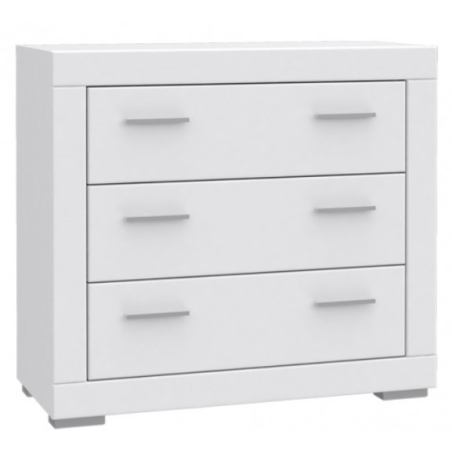
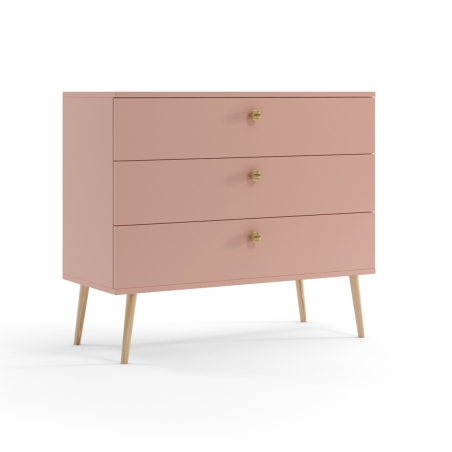
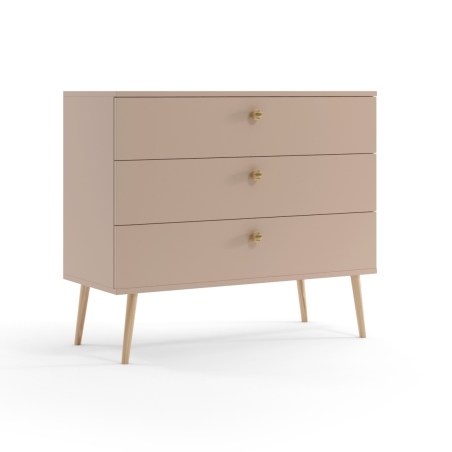
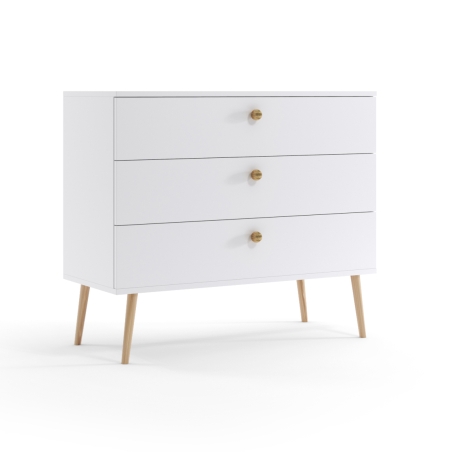
Wid: 96.00, Dep: 41.00, Hgt: 87.00.
Snow chest of drawers SNWK23 Forte
- Ability to bring in
When choosing furniture for a bedroom or wardrobe, we usually focus on the width and height of a chest of drawers to fit it against a free wall. However, it is the depth of the furniture that determines its real usability. The market standard is chests with a depth of 40 cm, often referred to as “compact” or “slim” models. Although at first glance they may seem to have limited capacity, proper space management and an understanding of drawer mechanics make it possible to get the most out of them. In 2026, with the growing popularity of minimalism and small-apartment optimization, the ability to estimate furniture capacity becomes crucial for a conscious customer.
In this article, we break down the construction of a typical 40 cm deep drawer. We will check its actual usable space, how many pairs of pants or T-shirts it can hold, and how clothing-folding techniques – including the famous KonMari method – affect what we can store in a bedroom dresser. This is a practical guide to help you decide whether a 40 cm model is sufficient for your needs or if you should look for deeper solutions.
When you see “depth: 40 cm” in a product specification, you need to know that this is not the internal dimension of the drawer. It is the external dimension of the furniture body. To understand how much space you really have, you must subtract a few centimeters for construction elements. A typical chest loses about 2–3 cm due to the thickness of the front and back panels. In addition, the drawer runners themselves have limitations – usually, the drawer ends about 2 cm before the back panel so that the mechanism can operate smoothly.
As a result, in a 40 cm deep chest, the inside of the drawer usually has a net depth of 33 to 35 cm. This is crucial information, because a standard folded men’s T-shirt is about 25–30 cm wide. This means that in a 40 cm drawer, clothes fit almost perfectly “edge to edge” when stacked, but leave very little space for additional accessories near the back panel.
Let’s assume a standard drawer with a width of 80 cm and an external depth of 40 cm (usable depth of 34 cm). How many clothes can we store in it while maintaining order and allowing smooth closing?
| Type of Clothing | Stacking Method (Classic) | Vertical Method (File Folding) |
|---|---|---|
| Cotton T-shirts | approx. 12–15 pieces (two rows) | approx. 20–24 pieces (three rows) |
| Jeans | approx. 6–8 pairs | approx. 10 pairs (rolled) |
| Underwear (socks/briefs) | approx. 30 sets (requires dividers) | approx. 45 sets (tight arrangement) |
| Hoodies / Sweaters | approx. 4–5 pieces (large volume) | Not recommended (too thick for vertical storage) |
In 40 cm deep chests, traditional stacking is the least efficient method. This creates a so-called “dead zone” – either the clothes are packed too tightly, or 5–8 cm of empty, unused space remains behind the stacks. The solution dominating modern homes in 2026 is vertical storage.
Folding clothes into small rectangles and placing them vertically (like files in an office) allows you to use the full depth of the drawer. In a 40 cm drawer (34 cm usable), you can arrange three rows of children’s clothes or two rows of adult clothes, gaining instant visibility of the entire contents. Additionally, it is worth investing in fabric organizers. Their rigid walls force even arrangement, preventing clothes from “puffing up” and blocking the drawer when opening.
.jpg)
In shallow chests (40 cm and less), the type of drawer runners is more important than in deep wardrobes. Partial-extension runners leave about 10 cm of the drawer hidden under the top panel. In a 40 cm piece of furniture, this means that nearly one-third of your clothes is hard to access. You have to reach deep under the top, which usually ends in mess.
In 2026, full-extension runners are the standard in good-quality chests. They allow the entire drawer box to slide out beyond the front of the furniture. This gives you access to clothes stored at the very back. When buying a 40 cm chest, a full-extension mechanism is an absolute game changer that realistically increases perceived capacity by 20–30%.
For standard double bedding sets, a 40 cm chest may be too shallow. Thick duvets and sheets take up a lot of space when folded and may block the drawer. This type of furniture works better for fitted sheets, pillowcases, or thin blankets. For thick bedding sets, we recommend chests with a minimum depth of 50 cm.
For stability and capacity, widths from 80 to 120 cm work best with a 40 cm depth. Very narrow and shallow chests (e.g., 40x40 cm) tend to tip over when a loaded drawer is pulled out, so they must always be secured to the wall.
It is an ideal size for a child’s room. Baby and children’s clothes are small, so a 40 cm drawer allows up to four rows of clothes side by side. It is the most optimal piece of furniture that does not take up play space on the floor while holding an entire young child’s wardrobe.
A 40 cm deep chest of drawers is a compromise piece of furniture, but extremely functional if used correctly. Although the actual usable space is several centimeters smaller than the external dimension, using vertical folding and full-extension runners allows you to store a surprisingly large amount of clothing. It is an ideal choice for narrow bedrooms, hallways, and children’s rooms, where every centimeter of free floor space is precious. Remember: it is not the depth of the furniture, but the way it is organized that determines how many clothes you can really fit inside.
Wid: 96.00, Dep: 41.00, Hgt: 87.00.
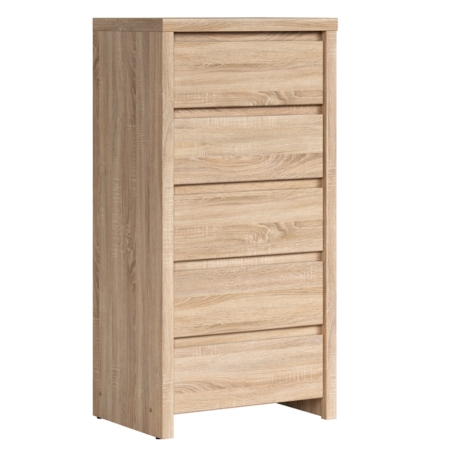
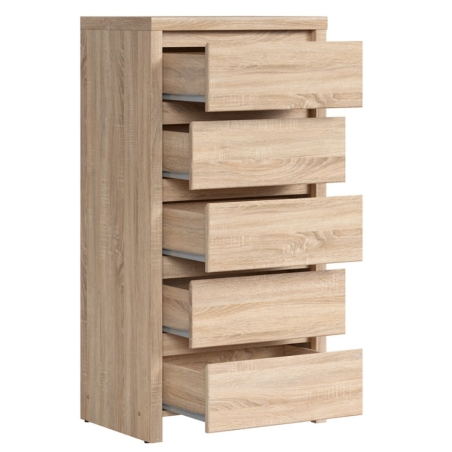
Wid: 56.00, Dep: , Hgt: 113.00.
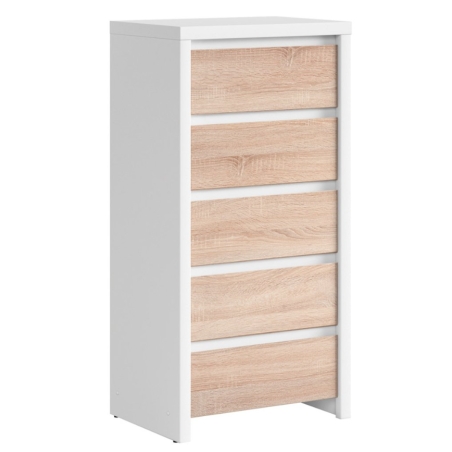
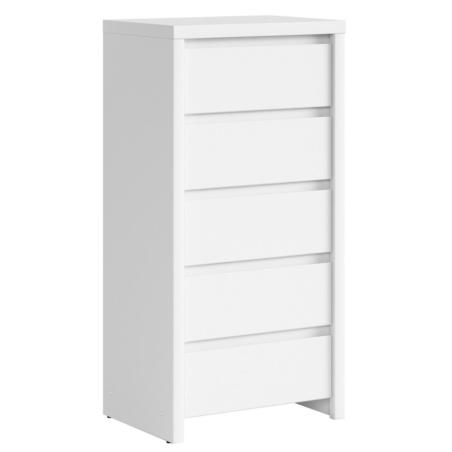
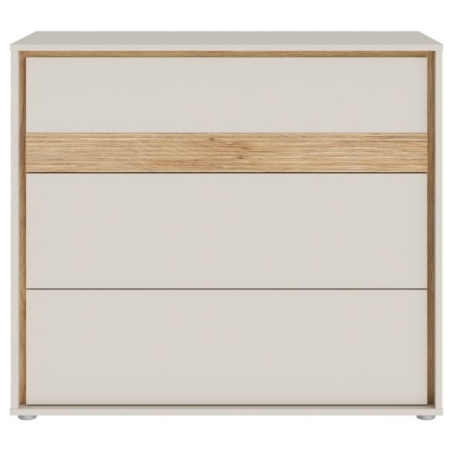
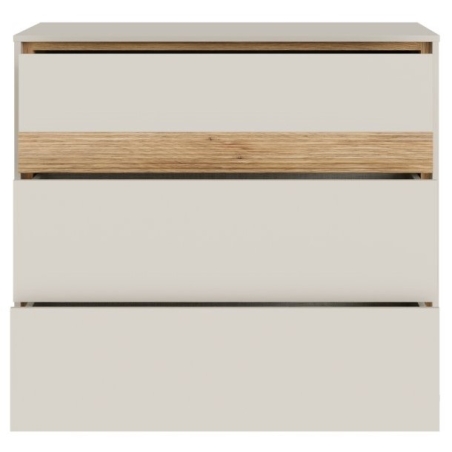
Wid: 120.00, Dep: 50.00, Hgt: 76.00.
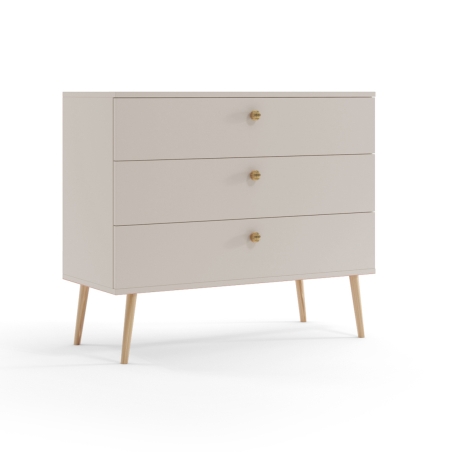
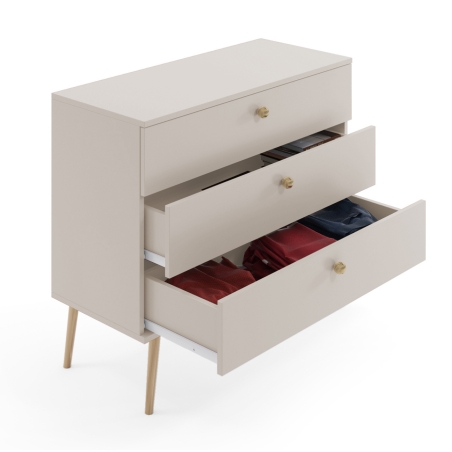
Wid: 135.00, Dep: 54.00, Hgt: 79.00.
 +1
+1 check_circle
check_circle